Outline:
The Enneagram is a model of nine personality types, each representing a different way of thinking, feeling, and behaving. It helps people better understand their core motivations, fears, and desires, fostering personal growth and improving relationships. The nine types are interconnected, showing how individuals respond to stress, growth, and conflict. By recognizing your Enneagram type, you can unlock deeper self-awareness and emotional intelligence.
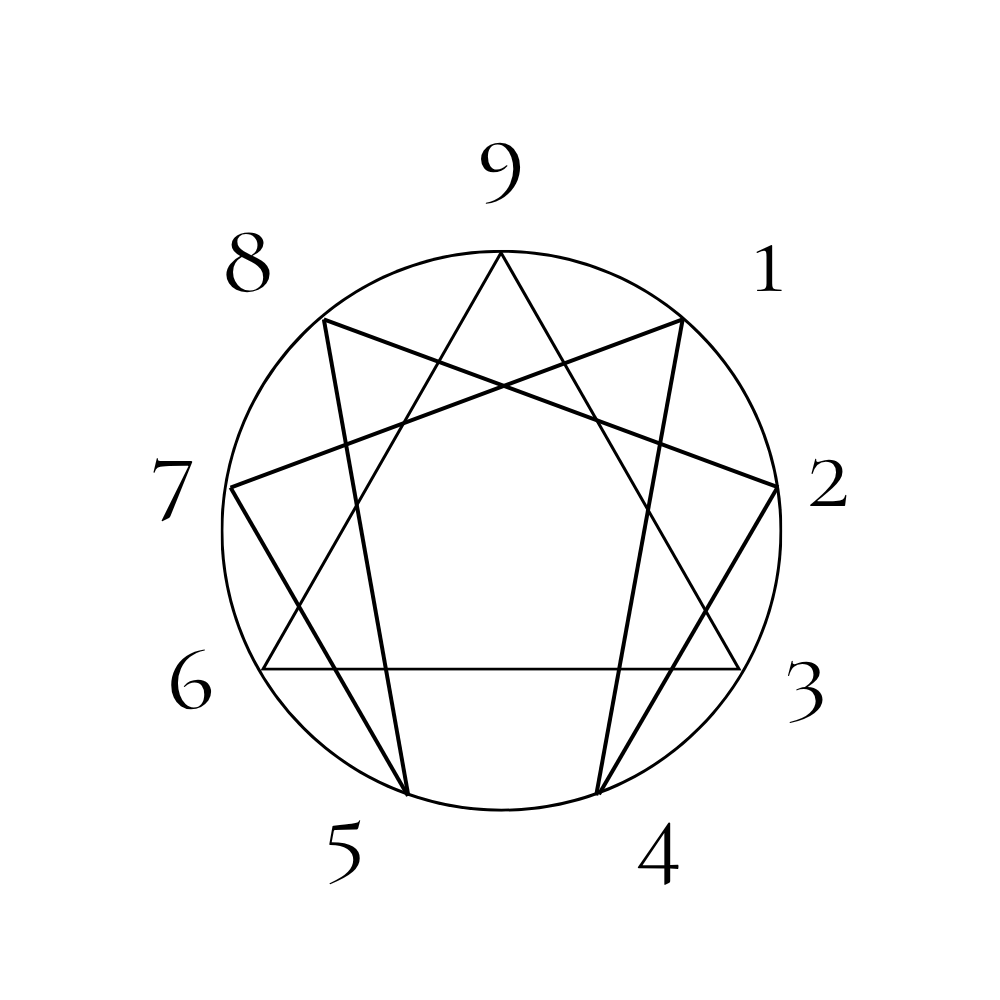
How is it Visualized?
It’s a system of typology that uses a nine-pointed symbol to represent how the different personality types relate to one another. The Enneagram helps individuals to better understand their own behavior and motivations, as well as those of others.
What are the Centers of Intelligence?
The Enneagram is divided into three distinct Centers of Intelligence; each associated with a dominant way of interacting with society:
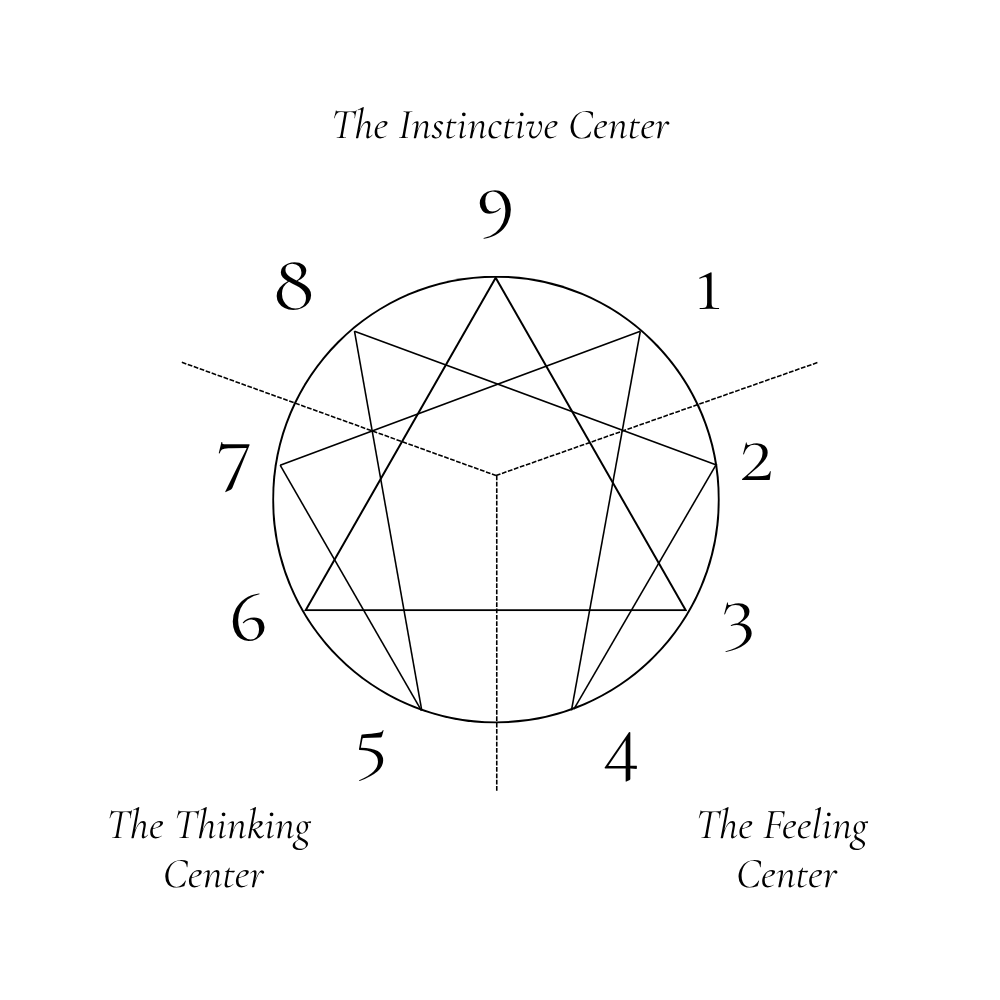
- Instinctive (Gut) Center – Types 8, 9, 1
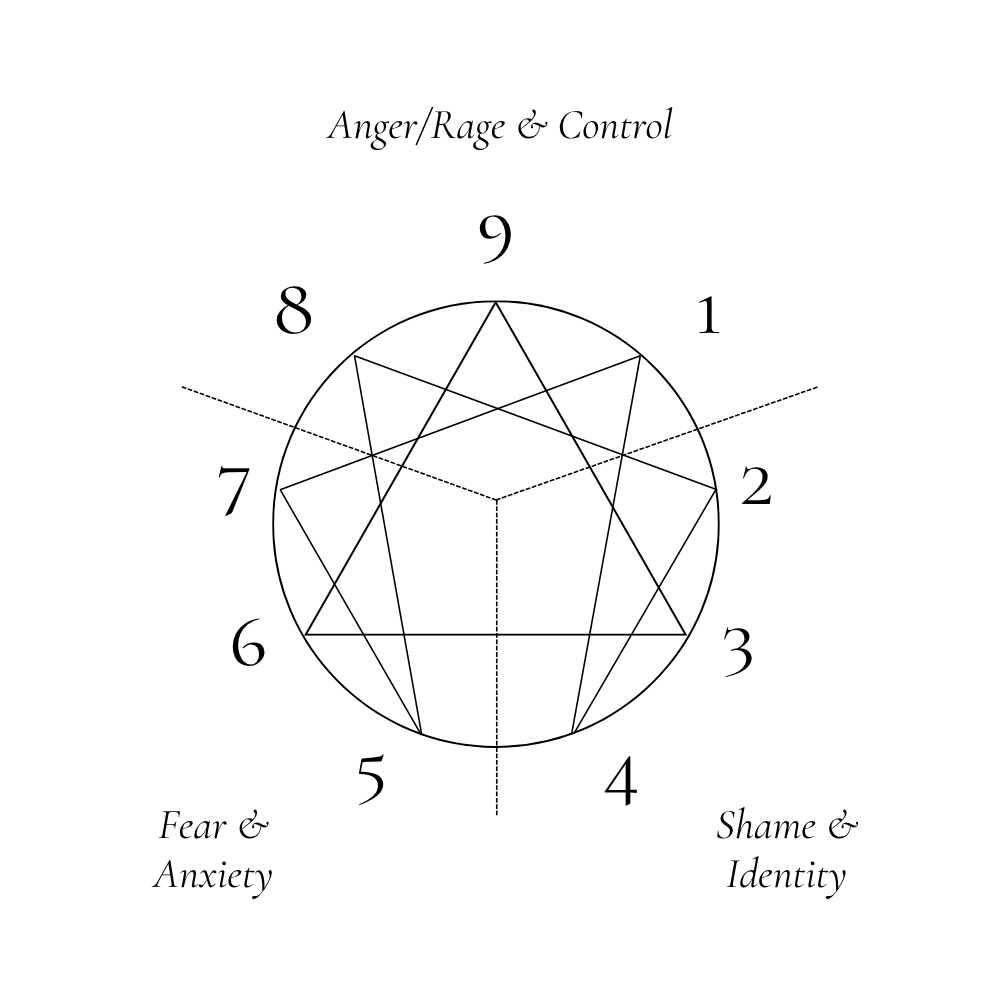
- Dominant Emotion: Anger/Rage and Control
- Focuses on autonomy, boundaries, and resisting being controlled.
- Reacts instinctively and values gut feelings.
- Feeling (Heart) Center – Types 2, 3, 4
- Dominant Emotion: Shame and identity
- Concerned with image, connection, and how others perceive them.
- Seeks approval and emotional validation.
- Thinking (Head) Center – Types 5, 6, 7
- Dominant Emotion: Fear and anxiety
- Deals with security, planning, and understanding.
- Processes experiences through analysis and ideas.
Each center reflects a different way of processing reality: body, heart, and mind.
The Nine Enneagram Types:
Type 1 – The Reformer
Is the rational, idealistic type who is principled, purposeful, self-controlled, and perfectionistic.
Core Desire: To be good, to have integrity, to be balanced and to do what is right.
Core Fear: Being corrupt or defective.
Enneagram One with a Nine-Wing: “The Idealist”
Enneagram One with a Two-Wing: “The Advocate”
Key Motivations: Is driven to be right, strives for everything to be elevated and improved, yearns to be consistent with their ideals and likes to justify themselves, and craves to be beyond criticism so as not to be condemned by anyone.
Key Traits: Ethical, responsible, perfectionist. Tend to be teachers, crusaders, and advocates for change: always striving to improve things, but afraid of making a mistake. Well-organized, orderly, and fastidious, they try to maintain high standards but can slip into being critical and perfectionistic. Often possessing a strong self-imposing inner critic. They typically have problems with resentment and impatience.
Stress/Conflict: Can become critical, resentful, and rigid under stress.
At their Best: Wise, discerning, realistic, and noble. Can be morally heroic.
Growth Path: Learning to accept imperfection and balance idealism with self-compassion.
Type 2 – The Helper
Is the caring, interpersonal type who is generous, demonstrative, people-pleasing, and possessive.
Core Desire: To feel loved and needed.
Core Fear: Being unwanted or unworthy of love.
Enneagram Two with a One-Wing: “Servant”
Enneagram Two with a Three-Wing: “The Host/Hostess”
Key Motivations: Is driven to be needed and appreciated, yearns to be loved, strives to express their feelings for others if given a chance, craves for others to respond to them, and to vindicate their claims about themselves.
Key Traits: Warm-hearted, empathetic, sincere. Tend to be well-meaning and driven to be close to others but can slip into doing things for others in order to be needed. Often prioritize others’ needs over their own feel indispensable and to earn affection through self-sacrifice. They often seek to make others feel loved and appreciated in return for validation. Can become overly attached to others and have trouble with boundaries. They typically have problems with possessiveness and with acknowledging their own needs.
Stress/Conflict: Can become possessive, manipulative, or self-sacrificial under stress.
At their Best: Unselfish, self-sacrificing, and altruistic, they have unconditional love for others.
Growth Path: Learning to recognize their own needs and value their worth without relying solely on external approval.
Type 3 – The Achiever
Is the success-oriented, pragmatic type who is adaptable, excelling, driven, and image-conscious.
Core Desire: To feel valuable and worthwhile, to achieve success and validation.
Core Fear: Being worthless or a failure.
Enneagram Three with a Two-Wing: “The Charmer”
Enneagram Three with a Four-Wing: “The Professional”
Key Motivations: Is driven to distinguish themselves from others, strives to impress others, yearns to be admired and affirmed by others, and craves the attention of others.
Key Traits: Ambitious, efficient, attractive. Tend to be status-conscious and highly driven for advancement working hard to maintain a positive image and seek to be admired for their accomplishments. They are diplomatic and poised, but can also be overly concerned with their image and what others think of them. Can struggle with authenticity, sometimes becoming too focused on their public persona. They typically have problems with workaholism and competitiveness.
Stress/Conflict: Can become overly competitive, image-driven, or workaholic under stress.
At their Best: Self-accepting, authentic, everything they seem to be role—models who inspire others.
Growth Path: Learning to embrace their true self, rather than constantly striving to meet external standards of success.
Type 4 – The Individualist
Is the sensitive, introspective type who is expressive, dramatic, self-absorbed, and temperamental.
Core Desire: To find themselves and their significance in order to create a unique identity that can be understood.
Core Fear: Being insignificant, misunderstood, or emotionally disconnected with no identity or personal significance.
Enneagram Four with a Three-Wing: “The Aristocrat”
Enneagram Four with a Five-Wing: “The Bohemian”
Key Motivations: Is driven to express themselves and their individuality, strives to create and surround themselves with beauty while maintaining certain moods and feelings, yearns to withdraw in order to protect their self-image to ensure they take care of their emotional needs before attending to anything else, and craves to attract a “rescuer.”
Key Traits: Honest, creative, emotionally intense. Tend to be moody and self-conscious or withdrawn when feeling misunderstood. Withholding themselves from others due to feeling vulnerable and defective, they can also feel disdainful and exempt from ordinary ways of living. They are highly attuned to their inner emotions and often feel a sense of longing or melancholy. They typically have problems with melancholy, self-indulgence, and self-pity.
Stress/Conflict: Can become moody, withdrawn, or self-absorbed under stress.
At their Best: Inspired and highly creative, they are able to renew themselves and transform their experiences.
Growth Path: Learning to accept themselves without needing constant external validation or comparison to others.
Type 5 – The Investigator
Is the intense, cerebral type who is perceptive, innovative, secretive, and isolated.
Core Desire: To be competent and capable. To understand the world around them.
Core Fear: Being useless, helpless, incapable, or overwhelmed.
Enneagram Five with a Four-Wing: “The Iconoclast”
Enneagram Five with a Six-Wing: “The Problem Solver”
Key Motivations: Is driven to possess knowledge, strives to understand the environment, yearns to have everything figured out as a way of defending the self from threats from the environment, and craves to seek intellectual mastery and independence, often withdrawing to observe and reflect.
Key Traits: Independent, innovative, inventive. Tend to be able to concentrate and focus on developing complex ideas and skills. Independent, innovative, and inventive, they can also become preoccupied with their thoughts and imaginary constructs. They become detached, yet high-strung and intense. They typically have problems with eccentricity, nihilism, and isolation.
Stress/Conflict: Can become detached, secretive, or excessively withdrawn under stress.
At their Best: Visionary pioneers, often ahead of their time, and able to see the world in an entirely new way.
Growth Path: Learning to connect with others and embrace emotional vulnerability without losing their sense of self-sufficiency.
Type 6 – The Loyalist
Is the committed, security-oriented type who is engaging, responsible, anxious, and suspicious.
Core Desire: To feel safe, supported, and secure.
Core Fear: Being without support, guidance, or security.
Enneagram Six with a Five-Wing: “The Defender”
Enneagram Six with a Seven-Wing: “The Buddy”
Key Motivations: Is driven to have security, strives to feel supported by others, yearns to have certitude and reassurance, to test the attitudes of others toward them, and craves to fight against anxiety and insecurity.
Key Traits: Reliable, hard-working, responsible. Tend to be excellent “troubleshooters,” they foresee problems and foster cooperation, but can also become defensive, evasive, and anxious—running on stress while complaining about it. They can be cautious and indecisive, but also reactive, defiant and rebellious. They seek reliability and often worry about potential threats to their stability. Can become overly skeptical or dependent on others for reassurance. They typically have problems with self-doubt and suspicion.
Stress/Conflict: Can become fearful, suspicious, or overly anxious under stress.
At their Best: Internally stable and self-reliant, courageously championing themselves and others.
Growth Path: Learning to trust themselves and their inner strength, rather than seeking constant external validation or reassurance.
Type 7 – The Enthusiast
Is the busy, variety-seeking type who is spontaneous, versatile, acquisitive, and scattered.
Core Desire: To be satisfied and content—to have their needs fulfilled.
Core Fear: Being deprived and in pain or period of suffering.
Enneagram Seven with a Six-Wing: “The Entertainer”
Enneagram Seven with an Eight-Wing: “The Realist”
Key Motivations: Is driven to maintain their freedom and happiness, strives to avoid missing out on worthwhile experiences, yearns to keep themselves excited and occupied, and craves to avoid and discharge pain.
Key Traits: Playful, high-spirited, practical. Tend to misapply their many talents, becoming over-extended, scattered, and undisciplined. They constantly seek new and exciting experiences, but can become distracted and exhausted by staying on the go. They avoid boredom or discomfort by seeking out positive experiences and distractions. They typically have problems with impatience and impulsiveness.
Stress/Conflict: Can become impulsive, scattered, or overindulgent under stress.
At their Best: They focus their talents on worthwhile goals, becoming appreciative, joyous, and satisfied.
Growth Path: Learning to face pain and limitations directly, allowing for deeper emotional growth and satisfaction.
Type 8 – The Challenger
Is the powerful, dominating type who is self-confident, decisive, willful, and confrontational.
Core Desire: To be strong, in control, and self-reliant in order to protect themselves and be control of their own life and destiny.
Core Fear: Being weak, vulnerable, harmed or controlled by others.
Enneagram Eight with a Seven-Wing: “The Maverick”
Enneagram Eight with a Nine-Wing: “The Bear”
Key Motivations: Is driven to be self-reliant, strives to prove their strength and resist weakness, yearns to be important in their world in order to dominate the environment, and craves to stay in control of their situation.
Key Traits: Protective, resourceful, straight-talking. Tend to be be ego-centric and domineering. Eights feel they must control their environment, especially people, sometimes becoming confrontational and intimidating. They typically have problems with their tempers and with allowing themselves to be vulnerable.
Stress/Conflict: Can become aggressive, domineering, or confrontational under stress.
At their Best: Self- mastering, they use their strength to improve others’ lives, becoming heroic, magnanimous, and inspiring.
Growth Path: Learning to be vulnerable and open to receiving help, rather than always feeling the need to control or protect.
Type 9 – The Peacemaker
Is the easygoing, self-effacing type who is receptive, reassuring, agreeable, and complacent.
Core Desire: To feel at peace, connected, and in harmony with others in order to achieve inner stability “peace of mind”.
Core Fear: Being in conflict, disconnection, or fragmentation, resulting in loss and separation.
Enneagram Nine with an Eight-Wing: “The Referee”
Enneagram Nine with a One-Wing: “The Dreamer”
Key Motivations: Is driven to be right, strives for everything to be elevated and improved, yearns to be consistent with their ideals and likes to justify themselves, and craves to be beyond criticism so as not to be condemned by anyone.
Key Traits: creative, optimistic, supportive. Tend to be too willing to go along with others to keep the peace. They want everything to go smoothly and be without conflict, but they can also tend to be complacent, simplifying problems and minimizing anything upsetting. They typically have problems with inertia and stubbornness.
Stress/Conflict: Can become complacent, disengaged, or avoidant under stress.
At their Best: Indomitable and all-embracing, they are able to bring people together and heal conflicts.
Growth Path: Learning to assert themselves and engage more fully with life, even when it means facing conflict or discomfort.
The Journey of Self-Discovery Continues:
As we wrap up this exploration of the Enneagram, I want to emphasize that this system is far more than just a set of labels. It’s a profound tool for self-discovery and personal growth. Understanding your Enneagram type and even gaining insight into the types of those around you, can unlock new levels of empathy, communication, and understanding.
Think of the Enneagram as a compass, guiding you toward a deeper awareness of your core motivations, fears, and desires. It’s not about boxing yourself in, but rather about providing a framework to understand your unique wiring and how it impacts your thoughts, feelings, and behaviors. This knowledge empowers you to lean into your strengths, address your blind spots, and ultimately, live a more authentic and fulfilling life.
I know this post was a bit dense, but I aimed to provide the information as accurately and concisely as possible. This personality system was one of the first pieces of theoretical knowledge I encountered during the early days of my postgraduate degree. It profoundly deepened my understanding of the human condition and how our personalities are shaped from our earliest years. The Enneagram helped me discover things about myself I hadn’t even considered; it put various aspects of my life into perspective. Whenever I feel static in my journey I refer back to it like a guidebook of life, and it sets me back on course in the direction I want to go.
My hope is that this post has served as a valuable resource on your own journey of self-exploration. Whether you’re just beginning to delve into the Enneagram or you’ve been studying it for years, remember that it’s a dynamic system. Your journey with the Enneagram is ongoing, evolving as you grow and gain new insights. Keep exploring, keep reflecting, and keep embracing the incredible complexity and beauty of who you are.
Sources/References:
Books:
Riso, D. R. (1990). Understanding the Enneagram: The practical guide to personality types. Houghton Mifflin.
Riso, D. R., & Hudson, R. (1999). The wisdom of the Enneagram: The complete guide to psychological and spiritual growth for the nine personality types. Bantam Books.
Palmer, H. (1991). The Enneagram: Understanding yourself and the others in your life. HarperSanFrancisco.
Naranjo, C. (1996). Character and neurosis: An integrative view. Gateways Books & Tapes.
Online Resources:
The Enneagram Institute. (n.d.). Enneagram Type Descriptions. Retrieved May 3, 2025, from https://www.enneagraminstitute.com/type-descriptions/
The Enneagram Institute. (n.d.). How The Enneagram System Works. Retrieved May 3, 2025, from https://www.enneagraminstitute.com/how-the-enneagram-system-works/
 Omid Therapeutic Services